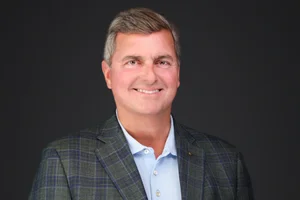

From the archive: this post looks back on my November 2021 conversation on the Results Leader podcast (RLP-061), recorded during my years leading TopRight. Listen to the episode here.
Some of the best lessons about trust don't come from a framework. They come from a phone call you never expected.
In 2021, Jonathan Rivera invited me onto the Results Leader podcast to talk about what it really takes to deliver results. It was a generous, wide-ranging conversation, and I'm grateful to Jonathan for it. Looking back now, as I finish Built for Trust, I can see how many of the book's ideas were already there, tested in the day-to-day work of running a services firm.
The case studies that didn't work out
Here's the story I keep coming back to.
A prospective client once told us why he chose us. Before he ever called, he went through our website and read every one of our case studies. He was surprised to find a couple where the punch line was, in effect, this didn't work out. And we had published them anyway.
As I recounted his words on the show: "I knew you guys were authentic... I mean, you're the people that I could trust."
That moment changed how I think about proof. Most firms curate their stories until only the wins are left. But a wall of perfect results doesn't prove anything. It just looks like marketing. Being willing to say "we tried, and this didn't work" was what made our successes believable.
In Built for Trust, I call this building a proof system. It's one of the moves in Trust Architecture™, my method for helping organizations become more trustworthy in ways people can actually see. Proof isn't polish. It's honest evidence, including the parts that didn't go to plan. As I said on the show, a great leader will "learn from those failures and magnify the results the next time."
Make the people who build the brand successful
Jonathan asked what drives a results leader. For me, the answer has always been other people's success.
Our clients were the marketing and brand leaders inside large companies. Our job was more than producing great work. It was helping them navigate the landmines and the institutional baggage of their organizations, and "focusing on how we make those people successful in their own careers. That's a really noble cause from my perspective."
I was also candid about the cost. In a service business, "when we run out of resources, the client doesn't go hungry, we go hungry." There's some nobility in that. But a firm that serves a noble cause also has to invest in its own people so it can keep delivering. Trust starts inside. You can't sustain it outside the building if you don't build it within.
Invest in your clients as much as they invest in you
When Jonathan asked about the most worthwhile investment I'd made, I talked about continuous learning: doing the background research and going deep. The same principle carries straight into client work: "In the service industry, you have to be willing to invest in your clients as much as they invest in you."
Sometimes the things we do to help a client's business or career don't pay back right away. That's fine. Trust compounds. Small, steady investments in the people around you build a reputation that no campaign can buy.
Respect people by meeting them on their terms
We also talked about advertising, and how much of it still works by interrupting us. I called that "somewhat rude." My point was simple: "instead of interrupting me to get your message across, why don't you meet me on my terms?"
That's a trust principle as much as a marketing one. Respecting people's time and attention is a promise you keep, or break, every time you show up. Brands that earn attention instead of taking it build relationships that last.
Stick to your why, even when it's hard
In 2008, we lost a major client. They were among the largest subprime lenders in the industry, just weeks from going out of business. We could have spent all our energy trying to win them back. That would have been a lost cause.
Instead, we pivoted and moved into healthcare. That work kept us afloat through the downturn, and when things picked back up, we were ready. As I put it: "Sometimes you lose people, sometimes you lose clients, but if you kind of stick to the overarching purpose, what you stand for, your why, that's usually a good way to navigate through those types of difficulties."
A clear purpose isn't a slogan. It's the filter that tells you which fights to walk away from and where to go next.
What this looks like on the Trust Maturity Model
Each of these stories shows the same thing from a different angle: trust is built through choices, not claims.
In Built for Trust, I describe five levels of the Trust Maturity Model™, from Trust Theater, where organizations perform trustworthiness, to Trust Capability, where trust is built into how the organization actually works. Publishing a failed case study is the opposite of Trust Theater. Investing in clients, respecting people's attention and holding to your purpose under pressure are signs of an organization climbing toward Trust Capability.
Where does your organization stand?
If these stories prompt a question about your own organization, start with the Trust Maturity Diagnostic™. It's a short assessment that shows you where you sit on the Model today, so you can see your next step.
And if you'd like the full story, Built for Trust (Greenleaf) arrives in 2027. You can pre-order the book below.
My thanks again to Jonathan Rivera and the Results Leader team. Listen to RLP-061.