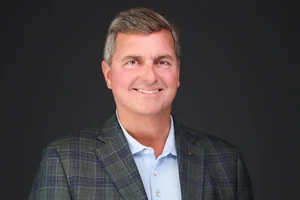
On Scaling Trust to Drive Growth
Reflections from My Conversation with Alan McLaren on “Unmasked: The CEO Files”
I recently joined Alan McLaren on Unmasked: The CEO Files for a wide-ranging conversation about marketing, AI, investing, leadership, and the growing trust gap in business.
The premise of the episode was simple: what happens when an engineer becomes a transformational marketer, investor, author, and board advisor? In my case, the answer is probably: a lifelong appreciation for both spreadsheets and stories. That combination has shaped much of my career. I started as an engineer, but I quickly learned that growth is rarely created by analysis alone. It comes from the ability to connect strategy, customer insight, operational discipline, and human judgment. Marketing, when done well, is not the department of slogans and campaigns. It is a business growth system.
That was one of the central themes of our conversation.
For too long, marketing has been treated either as a cost center or as a creative function operating somewhere outside the “real” business. I have never believed that. Marketing should be treated as a measurable investment in growth. It should be tied to customer behavior, revenue outcomes, enterprise value, and competitive advantage.
The best marketing organizations understand both sides of the equation: the science and the storytelling.
The science gives us the discipline. It forces us to understand customers, measure outcomes, improve decision-making, and allocate resources intelligently. The storytelling gives us the connection. It helps people understand why a company matters, why a product deserves attention, and why a brand deserves trust.
One without the other is incomplete. Data without story is noise. Story without data is theater. And unfortunately, business has had plenty of both.
Alan and I also spent a lot of time on artificial intelligence, which is reshaping marketing, business operations, and leadership faster than most organizations can comfortably absorb.
AI is not just another technology tool. It is collapsing the historical divide between creativity and analytics. It is changing how companies create content, understand customers, personalize experiences, run operations, and make decisions. It is also forcing leaders to ask harder questions about defensibility, differentiation, and human capital.
From an investor’s perspective, the question is not simply whether a company “uses AI.” That is quickly becoming table stakes. The better question is whether AI creates durable advantage. Does it improve the economics of the business? Does it strengthen the customer experience? Does it create proprietary data, workflow integration, or operational leverage that competitors cannot easily replicate?
If the answer is no, then AI may be useful, but it is not yet strategic.
The same is true for leadership. AI will amplify capable leaders and expose weak operating models. It will make some work faster, some work cheaper, and some work unnecessary. But I do not believe the future of leadership becomes less human. I think it becomes more human.
As machines become better at producing answers, leaders will become more responsible for asking the right questions.
That requires judgment. It requires critical thinking. It requires the ability to develop people, build trust, and create cultures where humans can do the work that machines cannot: interpret ambiguity, understand emotion, make ethical choices, and lead through uncertainty.
Which brings us to trust.
Trust may be the most important business issue hiding in plain sight.
We are living through a period where trust is fragmenting across almost every system that used to provide stability: media, technology, institutions, brands, employers, and even leadership itself. People are asking more fundamental questions now.
Is this real?
Can I verify it?
Who benefits?
Who controls the platform?
Does this company actually believe what it says?
Do the people inside the organization believe the story?
These are no longer soft questions. They are strategic questions. They affect customer acquisition, employee engagement, investor confidence, brand value, and leadership credibility.
One of the points I made in the episode is that trust is becoming a currency. But unlike financial capital, trust compounds slowly and can be destroyed quickly. Leaders cannot manage it only through communications. They have to build it into the operating system of the business.
That means aligning what you say, what you do, what you measure, what you reward, and how you show up.
Alan also introduced a useful idea through his work at Strata Originals: helping leaders understand how they “land” in the room. That resonated with me. Leadership is not only about intent. It is also about signal.
You may believe you are being clear, but are people actually hearing clarity?
You may believe you are being transparent, but are people experiencing transparency?
You may believe you are building trust, but are people feeling safer, more aligned, and more confident because of how you lead?
That gap between intention and impact is where a lot of leadership work needs to happen.
The conversation also touched on YPO, my own leadership journey, and the importance of surrounding yourself with peers who will tell you the truth. One of the great gifts of YPO is that it creates rooms where leaders can take off the armor. That is increasingly rare and increasingly valuable.
Most leaders do not suffer from a shortage of opinions. They suffer from a shortage of honest mirrors.
The best leadership rooms provide that mirror.
They help you see not only what you are building, but who you are becoming while you build it.
That is why conversations like *Unmasked* matter. In a world full of curated content, polished bios, and algorithm-friendly leadership advice, there is still enormous value in getting beneath the title and talking honestly about the pivots, mistakes, patterns, and lessons that shape a leader over time.
For me, the through-line is pretty simple.
Marketing is not decoration. It is growth discipline.
AI is not magic. It is leverage — if applied with judgment.
Investing is not just capital allocation. It is pattern recognition under uncertainty.
Leadership is not performance. It is trust at scale.
And trust is not a message. It is a system.
I appreciated the opportunity to join Alan McLaren and explore these ideas in a candid way. The mic was on. The masks were off. And hopefully, the conversation offers a useful signal for leaders trying to grow, adapt, and lead in a world that keeps getting louder.