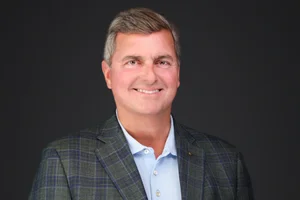
On November 8, Nvidia's board opened an independent investigation of its founder and CEO, Jensen Huang, "in light of recent reporting that founder and CEO Jensen Huang has been the target of a foreign intelligence effort." The statement ended: "The Board has confidence in Jensen and his leadership team."
On November 12, Huang resigned as president, CEO and director, effective immediately. CFO Colette Kress became interim CEO and remained CFO. Harvey C. Jones was named the company's first-ever chair.
On November 17, Huang said that if the board decided his return was "in the best interest of our shareholders, our employees, the company, and America, I would be honored to answer these calls and return as CEO." Hours later, Jones told investors the board had "unanimously accepted his resignation and does not intend to reinstate Jensen as CEO." The same day, the board created a National Security and Export Control Oversight Committee and said Heidrick & Struggles would lead the CEO search. The next day, at a company meeting, Jones said the board had accepted the resignation because of personal conduct and a "lack of candor," according to remarks reviewed by WIRED.
On November 22, five days after that refusal, the board voted unanimously to reinstate Huang as president, CEO, and director, effective immediately, and announced it the next day. After "a series of discussions and meetings with Mr. Huang," the board said it "was satisfied with respect to Mr. Huang's candor and ability to lead NVIDIA." Jones, who remains chair, said: "We have every confidence in Jensen." Kress continues as CFO. The investigation, the board said, "will proceed to conclusion." It also said that, based on "input from senior levels of the United States government," it "is confident that Mr. Huang's reinstatement poses no national security risk."
I'm not going to guess at the personal facts. What I can look at is the process.
What a board has to be able to see
In Built for Trust, I define coherence as "the alignment among the organization's promises, operating model, incentives, and behavior." I also write that a board has to protect candor, because "A director can only govern the company the board is allowed to see."
The November 8 statement of confidence, and the company's same-day assurance that Huang would continue "without interruption," were predictions. Four days later, they were not. Process replaced them: a chair, an investigation, a search firm, a standing committee, and a public refusal to predict a return. Jones told employees, "We will not compromise our requirements for the sake of expediency." The refusal did not hold, and the public still cannot see what the board now says it sees.
I call the CEO the Chief Coherence Officer. The test is whether directors can tell if what they are being told is complete enough to govern.
The question that did not get answered
At the November 18 company meeting, according to WIRED, compensation was the most common topic among about 700 questions submitted in advance. The next most common request was for transparency from the board. Kress told staff that raises and additional equity would arrive in December, moved up from the usual March review. That answers one question, not the other. In the book I write that people "will believe the stronger signal." A raise is a signal. A reinstatement is a signal. Neither explains what changed between a "lack of candor" and the board's later satisfaction with it.
On November 19, California's attorney general served an investigative subpoena on Nvidia, asking whether advanced chips or confidential information may have gone to China and whether the company misled investors. Outside the company, the demand is still for evidence.
Confidence, and what proves it
Most boards will never face this in public. I would still ask two questions. If a director asked your CEO a hard question, would the board know whether the answer was complete? And if your employees asked for transparency tomorrow, would they get an explanation, or a different kind of signal?
The Trust Maturity Model™ runs from Trust Theater, the claim without a system behind it, to Trust Capability, where the proof exists before anyone asks. This is another twist in Trust Theater: confidence, then a "lack of candor," then satisfaction with candor and confidence again, while the investigation is still underway. Confidence is a claim. Candor is a control. A board that cannot tell the difference will find out in public.
Where does your organization sit on the Trust Maturity Model? Take the Trust Maturity Quiz. It takes about five minutes.